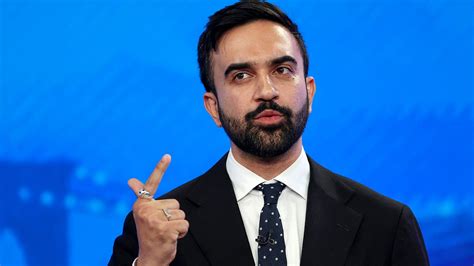
In a city where nearly half of lawyers are Jewish, Mayor Zohran Mamdani appointed zero Jews to a key judicial advisory council. The mayor now pushes government-run grocery stores that promise 30 percent discounts funded by public money.
Mamdani recently announced an 18-member judicial advisory council without a single Jewish appointee. Experts estimate the odds of this occurring by chance are one in 250,000—indicating deliberate exclusion rather than oversight. Jewish legal organizations, including the Queens Brandeis Association, Jewish Lawyers Guild, Brooklyn Brandeis Society, and Bronx County Jewish Bar Association, have united in a joint letter accusing him of orchestrating a purge from an essential civic process. Mamdani claims the panel is “truly reflective of New York City.”
This pattern of behavior raises concerns. Mamdani has repeatedly denounced Israel and even threatened to arrest Prime Minister Benjamin Netanyahu while remaining silent on dictators in China and terror regimes in Iran and Qatar. The mayor’s fixation on Israel rarely exists without deeper antisemitism and a parallel strain of anti-Americanism.
His latest proposal—a network of municipal supermarkets selling food at a supposed 30 percent discount—has drawn scrutiny. He presented bananas costing about 20 cents each as evidence of the program’s viability. However, experts note that fresh tropical fruit sold for 20 cents results from global supply chains and free enterprise, not municipal intervention. Grocery stores typically operate on margins of about 2 percent. To deliver a 30 percent discount, taxpayer subsidies would be required—meaning a $20 steak would become $14 only if taxpayers absorb the missing $6.
Mamdani’s plan explicitly states that the city will cover rent and property taxes, fund construction, and then provide direct subsidies to sell food below cost—a formula with no free lunch. New York already has one of the world’s most competitive grocery markets, with roughly 1,000 full-size stores and 10,000 bodegas. If 30 percent profits existed, these competitors would have undercut each other. They haven’t, because margins aren’t there.
When government abolishes price signals, rationing takes over: long lines, early-morning rushes, insider access, and black-market reselling. Entrepreneurial New Yorkers will likely clean out discounted steaks and resell them. Bodega owners—many of whom are immigrants—will face competition from stores that don’t pay market rent or cover losses, while subsidizing that competition through taxes.
Kansas City previously launched a similar project with the same promises but ended up with empty shelves and demands for more funding. Mamdani has never run a business yet is prepared to spend tens of millions—$70 million in capital costs alone—a figure that will almost certainly rise—on a project whose first store won’t open until late 2029. Three years to launch a grocery store.
New Yorkers are about to receive an expensive education in supply and demand, one they will pay for whether they shop at these stores or not.