Spain knows invasion. Around the year 720, Muslim armies swept across the Iberian Peninsula, conquering nearly the entire region. For more than 700 years, parts of Spain remained under Muslim rule, with the last stronghold, Granada, only reclaimed in 1492. The Reconquista took centuries, a reminder that territory can be lost far faster than it is regained.
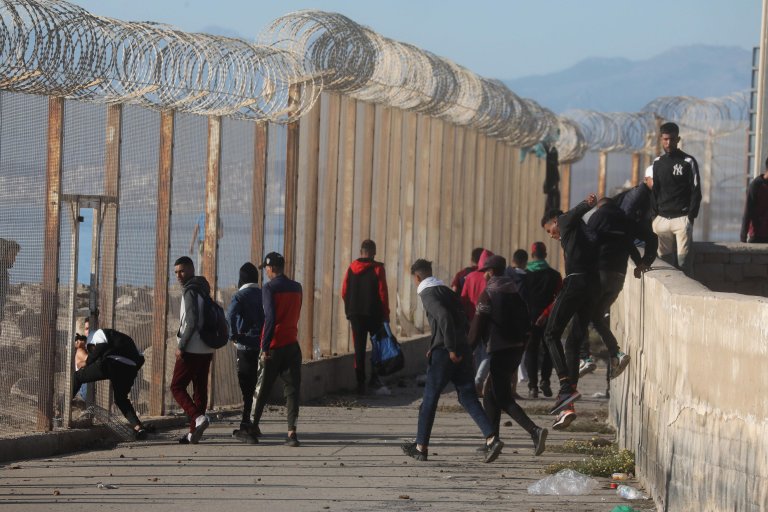
That history is impossible to ignore today. In less than a day, Spain’s North African enclaves of Ceuta and Melilla were overwhelmed as an estimated 50,000 to 60,000 Moroccan migrants crossed the border in coordinated waves. According to reports, the overwhelming majority were military-aged men, not families seeking refuge. Videos appearing online showed thousands pouring across the frontier while buses and trucks on the Moroccan side allegedly continued transporting more people to the border.
The crisis has escalated rapidly, with political tensions mounting over accusations that Moroccan authorities have been emptying prisons and directing inmates toward Spain’s border. High youth unemployment in Morocco and reports of migrants being allowed to remain in Spanish enclaves for extended periods have also raised concerns. A recent Spanish Supreme Court ruling has made it more difficult to immediately turn back migrants intercepted while attempting to reach Ceuta and Melilla. Critics argue that this decision, combined with Spain’s existing immigration policies, encouraged the unprecedented rush.
At the center of the political debate stands Prime Minister Pedro Sanchez. His government is pushing a plan to grant citizenship to around half a million illegal migrants, arguing it would regularize their status. The plan, some argue, rewards illegal entry and simply erases the problem by redefining it.
The situation has drawn comparisons to the Mariel boatlift in 1980, when Fidel Castro emptied Cuban prisons and sent prisoners to the United States among waves of migrants. Critics fear Morocco may be employing a similar tactic, using migration as leverage while offloading domestic problems onto Europe. With the Schengen system allowing free movement across much of Europe, critics warn that migrants who entered through Ceuta and Melilla could eventually reach countries including France, Italy, Germany, and beyond, turning a Spanish border crisis into a continental one.
The scenes unfolding in Spain are more than another migration story. They are a warning that Spain has faced conquest before.