Two days into reporting from Ceuta, an autonomous Spanish territory on North Africa’s coast, Alexandra Lavoie documented a crisis that has left two borders collapsing simultaneously.
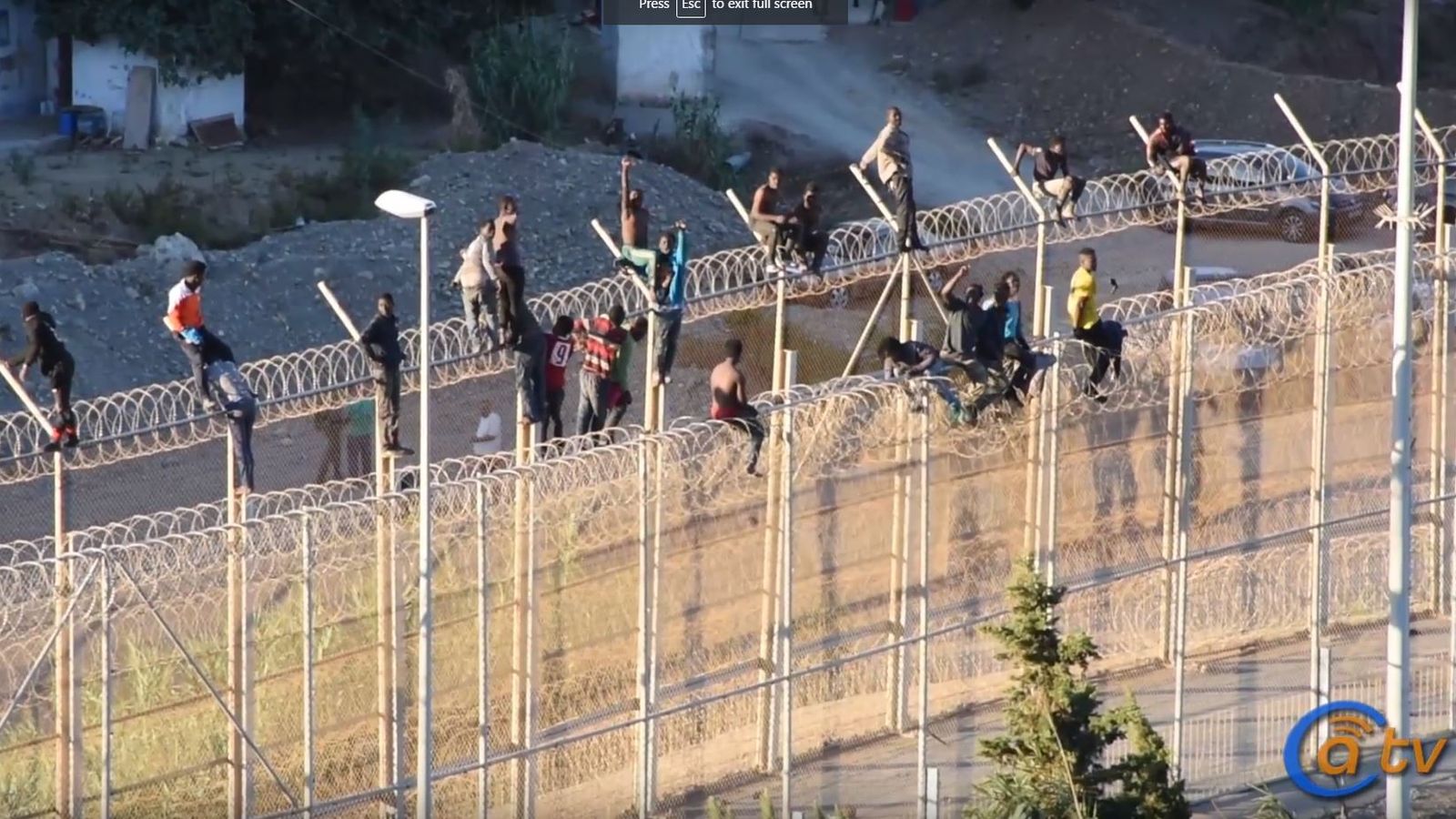
Late into the night on July 30, 2026, both Ceuta and Melilla, another Spanish enclave, were overwhelmed by massive illegal crossings. In Ceuta alone, more than 60,000 mostly military-aged men crossed by sea, climbed border fences, and poured into the city of only 83,000 residents.
Few realize that before this influx at El Tarajal became infamous, Ceuta was already facing a separate wave of illegal migration near Benzú. At Benzú, thousands of migrants from countries beyond Morocco— including Yemen, Nigeria, and Senegal—were observed gathered outside processing centers and spread across nearby beaches. Several reported that military and police had not taken their information: no identification, no background checks, no records.
The overwhelming majority were young men. A smaller number of women had been separated due to safety concerns, including the risk of sexual violence. These migrants now roam across Ceuta, with some spotted in city centers but many living in remote areas, mountains, and bushes surrounding the territory. Near the border, a packed facility for women and minors operates largely out of sight.
Guardia Civil officials confirmed that individuals entering illegally are not being arrested, and they remain unclear about when or if deportations will occur. At present, two routes exist at the border: one formal crossing where identification is checked and photographs are taken; the other, a hidden ditch route through which people without documents are simply walked back into Morocco with no questions asked, photographs, or consequences.
Spanish Prime Minister Pedro Sánchez’s government has effectively surrendered to political pressures. By signaling that Spain’s borders can be overwhelmed with minimal consequences, he has sent a message that will not stop at Ceuta. A country that does not control its borders is not fully in control of its future. And under Pedro Sánchez, Spain is losing control.